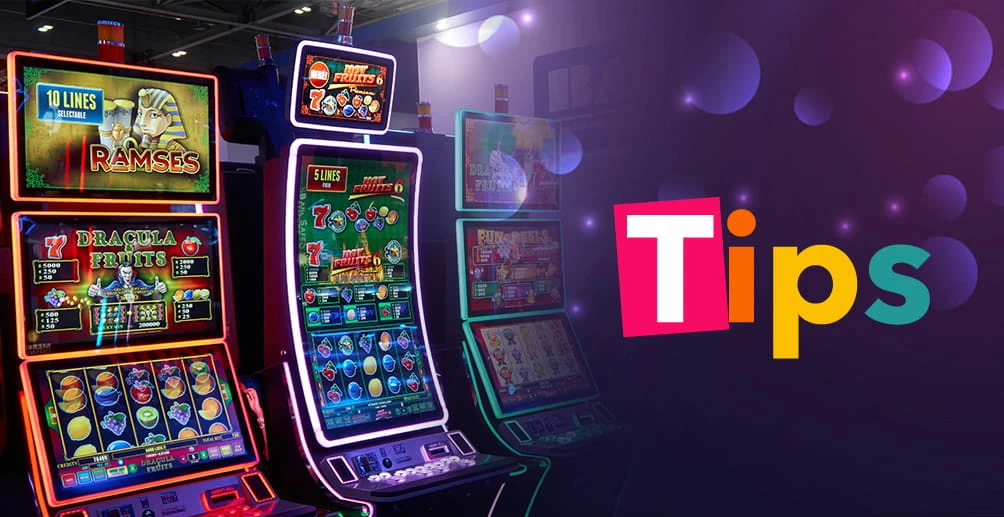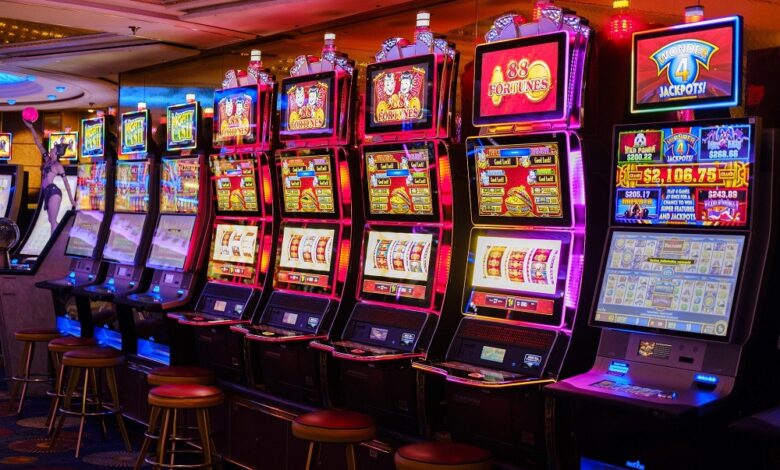
The gaming industry has constantly reinvented its core hardware to capture player attention and elevate engagement. From mechanical three-reel cabinets featuring physical levers to high-definition video terminals with curved touchscreens, slot machines evolve alongside consumer technology. Today, a major shift is unfolding as hardware manufacturers and software developers integrate Augmented Reality (AR) into modern slot machine design.
Unlike Virtual Reality (VR), which completely isolates users inside closed digital environments, Augmented Reality overlays interactive computer graphics onto the real world. In both brick-and-mortar casino venues and mobile gaming spaces, AR bridges the gap between physical hardware and digital animation. By transforming static machine frames into dynamic three-dimensional stages, AR technology is redefining how players interact with slot games.
The Fundamentals of Augmented Reality in Slot Gaming
Integrating Augmented Reality into slot gaming involves blending real-time spatial computing, visual tracking sensors, and dynamic graphic rendering with traditional game mathematics. Instead of restricting game visuals to a flat two-dimensional monitor, AR allows graphical elements to extend beyond physical screen margins.
Key Technological Components
Developing an AR-enabled slot machine environment requires a combination of hardware and software innovations:
-
Spatial Sensors and Depth Mapping: Infrared cameras, optical tracking sensors, and LiDAR processors scan the surrounding environment to map physical cabinet dimensions, table surfaces, and hand movements accurately.
-
Transparent Optical Displays: Physical casino cabinets utilize specialized see-through OLED or projection glass panels. These displays render digital graphics over physical mechanical reels or structural cabinet backgrounds.
-
Smart Glasses and Mobile Projection: On mobile digital platforms, AR slot engines utilize smartphone cameras or smart glasses to project three-dimensional slot reels onto physical surfaces like kitchen tables or desks.
-
Real-Time Render Engines: Powerful graphics processing units execute spatial rendering scripts in milliseconds, ensuring that 3D digital overlays match the user’s viewing angle without visual lag or jitter.
Enhancing the Physical Casino Floor Experience
On traditional casino floors, standing out among hundreds of flashing cabinets is a major operational challenge. Augmented Reality gives physical machine cabinets a visual edge that flat monitors cannot match.
Immersive Bonus Rounds and Visual Storytelling
Traditional slot machines launch bonus rounds on secondary video screens situated above the main reels. AR transforms the entire space surrounding the cabinet into an interactive stage.
When a bonus feature triggers, animated characters can step out from the display screen, hovering in mid-air directly in front of the player. In an adventure-themed slot, a dragon might project three-dimensional fire breath toward the player’s physical button deck, or digital gold coins might appear to spill out from the physical machine chassis onto the casino carpet.
Gesture-Controlled Interactive Gameplay
AR technology replaces static push-button interactions with intuitive spatial gestures. Infrared tracking sensors above the control panel detect hand movements, allowing players to interact directly with digital elements projected in front of them:
-
Physical Reel Manipulation: Players can swipe their hands through the air to spin virtual reels or physically grab floating bonus boxes to reveal hidden multipliers.
-
Spatial Touchpoints: Instead of tapping a flat glass screen, players reach out to touch three-dimensional target objects floating in open space.
-
Skill-Based Arcade Features: Interactive mini-games allow players to shoot floating targets or navigate obstacle paths using hand gestures during feature rounds.
Bridging Mobile Gaming and Spatial Computing
While physical casinos deploy specialized AR machine cabinets, the broader deployment of AR slot technology occurs within mobile and spatial computing environments.
Turning Any Environment Into a Gaming Lounge
Mobile AR applications allow users to turn standard living spaces into personal gaming environments. By opening a mobile app and pointing the device camera at an empty table, the software renders a complete three-dimensional slot cabinet sitting directly on the surface. Players can walk around the virtual machine, inspecting its cabinet details from different angles before pulling a virtual lever or tapping screen controls.
Hands-Free Gaming via Smart Glasses
As lightweight smart glasses gain adoption, AR slot applications move from smartphone screens directly to wearable optics. Wearing lightweight smart lenses allows players to view floating high-definition game displays anywhere while retaining full peripheral visibility of their physical surroundings. This provides a private, distraction-free gaming experience without closing off real-world social interaction.
Personalization and Adaptive Visual Environments
Augmented Reality allows slot software to deliver custom visual experiences tailored to individual user preferences without modifying the underlying mechanical hardware.
Dynamic Themes and Customizable Cabinets
In traditional casinos, retheming a physical machine requires changing graphic glass panels, replacing button artwork, and updating internal software packages. AR-enabled cabinets simplify this process significantly. A single physical shell equipped with transparent AR displays can host dozens of distinct game themes.
When a user logs into their rewards account, the machine can project custom visual themes, preferred color schemes, or personal milestone trophies directly onto the cabinet frame, dynamically altering the machine’s appearance in real time.
Real-Time Player Data Overlays
Integrated AR displays allow operators to present personalized account data seamlessly without obstructing primary reel action:
-
Loyalty Status Displays: Real-time progress bars showing reward tier points hover unobtrusively alongside the main reels.
-
Customized Responsible Gaming Alerts: Personalized session time reminders, budget indicators, and cool-off prompts can be displayed directly within the player’s direct field of view.
-
Integrated Tournament Leaderboards: Live player rankings and real-time score updates from floor-wide tournaments stream alongside active game reels.
Operational Advantages for Casino Operators
Deploying Augmented Reality delivers structural benefits to casino floor managers and platform developers beyond aesthetic appeal.
Optimizing Casino Floor Real Estate
Physical floor space inside commercial casinos is limited and expensive. Traditional multi-screen machine cabinets require significant physical footprints. AR technology allows manufacturers to build sleek, single-screen cabinets that project expansive multi-monitor setups virtually, maximizing revenue potential per square foot of gaming floor.
Lowering Hardware Refresh Costs
Updating casino floor offerings traditionally requires capital expenditure to acquire new physical machines. With AR infrastructure, developers can push over-the-air software updates that overhaul 3D visual environments, character animations, and spatial bonus features without replacing the physical machine shell or control hardware.
Overcoming Technical and Regulatory Challenges
While the benefits of AR slot innovation are clear, widespread adoption requires overcoming specific engineering and regulatory hurdles.
-
Hardware Cost and Thermal Management: High-performance spatial processing requires powerful hardware that generates substantial heat and consumes significant energy, necessitating advanced thermal cooling inside compact machine cabinets.
-
Optical Fatigue and Motion Sickness: Improperly calibrated 3D projections can cause eye strain or visual disorientation during long sessions. Developers must optimize frame rates and focal depths to maintain visual comfort.
-
Strict Regulatory Certification: Regulators must inspect and certify that three-dimensional AR projections do not obscure mandatory game information, financial balance displays, or paytable rules.
-
Lighting Variations on Casino Floors: Casino lighting varies widely between venues. Spatial tracking camera arrays must operate reliably across diverse ambient lighting conditions to prevent visual tracking drops.
Frequently Asked Questions
What is the main difference between AR slots and VR slots?
Augmented Reality (AR) slots overlay digital three-dimensional graphics onto the real-world physical environment, allowing players to remain fully aware of their surroundings. Virtual Reality (VR) slots isolate the player entirely inside a completely digital, artificial world using closed head-mounted displays.
Do AR slot machines change the underlying game math or payout probabilities?
No. Augmented Reality alters only the visual presentation, graphic rendering, and user interface layers. The core random number generator, Return to Player percentage, volatility profile, and mathematical probabilities remain strictly regulated and unalterable by the visual AR layer.
Can I play AR slot games on a standard smartphone?
Yes. Modern smartphones equipped with standard camera hardware and spatial software frameworks can run mobile AR slot games. The application uses the device camera to project a virtual three-dimensional slot machine onto any flat surface visible on screen.
How do gesture controls work in AR slot machines?
Physical AR cabinets utilize optical tracking sensors and depth cameras positioned around the control deck. These sensors track hand position, finger movements, and spatial gestures in real time, translating physical hand motions into digital commands within the projected 3D environment.
Are AR slot machines comfortable to play during extended gaming sessions?
Developers design AR slot visuals using stable focal planes, low-latency tracking algorithms, and high refresh rates to minimize eye strain. Players can view projected 3D graphics comfortably without the visual fatigue or motion disorientation sometimes associated with fully enclosed VR headsets.
How do transparent AR displays function on physical casino cabinets?
Transparent AR displays use specialized optical glass panels embedded with micro-LEDs or projection layers. These displays remain crystal clear when turned off, but can project vibrant, semi-opaque three-dimensional digital animations over physical reels or background cabinet surfaces when powered on.
Will AR technology make physical casino cabinets obsolete?
No. Rather than replacing physical cabinets, AR enhances them. It allows manufacturers to build sleeker, more interactive physical cabinets that combine physical tactile controls with dynamic spatial graphics that extend beyond the screen boundaries.